Even more of your questions, answered.
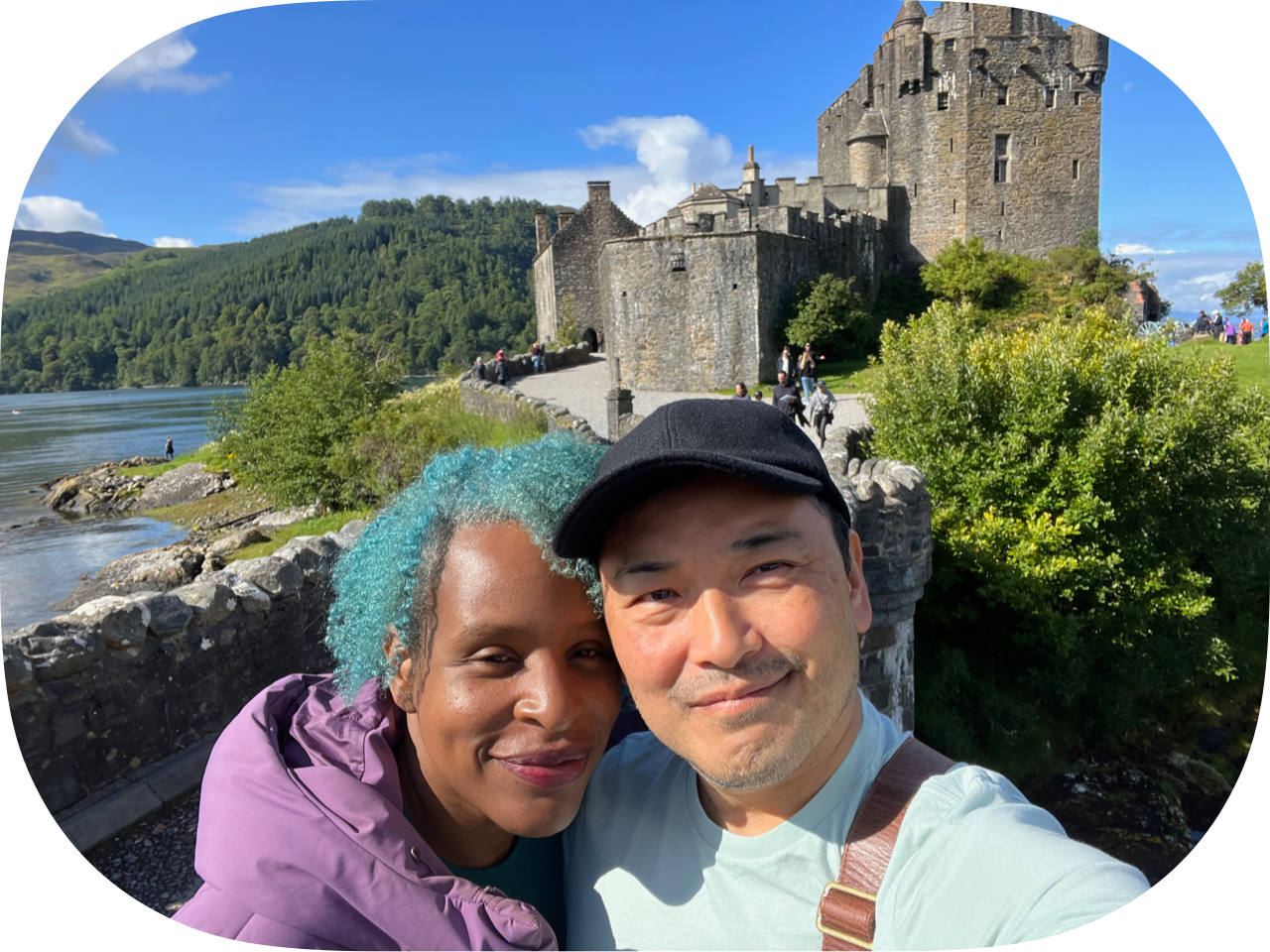
Hi! Hope you all had a great summer. I did a lot of traveling! Above is me and Nicki at Castle Dunvegan in Scotland, for instance. Anyway, on to your fabulous questions!
The writers strike has put pretty much everything on pause, but before that the long, slow, haphazard process of adapting Frankly In Love to film was still happening. It's an uncertain time but hopefully we'll emerge from it soon with more news!
As for my favorite Korean meal? Impossible question! It's super difficult to find normal Korean food in Europe. One restaurant offered "spicy addictive cabbage", which was literally just raw cabbage sprinkled with sambal oelek lol. So since I've been back in LA, I've binged: kimchi chigae (kimchi stew), naengmyeon (cold noodle soup), eun daegu jorim (braised cod), kkaennip kimchi (made of sesame leaves), and on and on. I love going to the Korean supermarket with my mom because I'm a mama's boy.
And yes, Shin Ramen Black is the best instant ramen on the planet! Amen, brethren! I eat mine with tofu, green onion, and seaweed...gotta try egg and cheese next!
You guys already know I'm fanatical about story structure...these days, I'm also getting more and more fanatical about character work, and creating what writers call a "bible" laying out all the world building in one place. It's fun as hell and extremely useful in guiding your line-level prose, descriptions, and dialogue. And yes, I even give minor characters (who I call NPCs) at least the briefest sketch of a backstory, plus things like primary desire, artifacts, a "problem", and more. I should talk about this in a separate newsletter, huh. :)
Anyway, character backgrounds work exactly like underpainting in art. Set it up once, and it'll guide the rest of the entire story at a largely unconscious level. Very cool stuff.
Congrats on getting serious about becoming a writer, Ainsley! It's hard work but I swear it's worth it. The hardest thing about writing is definitely pushing out that dreaded first draft. And I totally understand the compulsion to go back and tweak, tweak, tweak things forever...I have it too. My big advice is to give yourself a deadline by promising your trusted beta reader (in my case, my wife) that they'll have something to read by a certain date. Deadlines work. If you really need to push yourself, do NaNoWriMo.
Also, help others with their manuscripts. You'll get used to seeing works in progress, which in turn makes it less cringey to show half-baked work of your own. You'll also learn that rewriting is writing.Rewriting counts just as much, or even more, than first-drafting.
Finally, nothing is ever perfect. That pretentious Da Vinci quote that Art is never finished, only abandoned? 100% true. A book goes through multiple rounds of revisions, then copyedits, then "pass pages", before finally landing on the shelf. By that point, I promise you its author has gotten sick of their own story and moved on to something else. Knowing that also can help make your first draft feel less precious, too.
Mental health is critical. Just as you should do an annual physical, you should regularly check in with your brain doctor (my term) even if nothing is "wrong." Also, a clean mental bill of health makes for better art, imo. You can always tell when a book's been written as a stand-in for therapy itself—the stories feel claustrophobic, feverish, one-dimensional, indulgent at worst. Good mental health gives you the headspace to perceive not just that things are happening, but why and how. And shouldn't novels try to think about this whyhow, even if they can't necessarily provide answers?
I think spirituality is important, too. The thing I like most about religion is how it builds community. People desperately need a place to be, a thing to do, and a time to do it. I personally think that true trust and friendship happens when someone begins to expect things of you. It means you matter. The alternative (rugged, usually toxic individualism) is too lonely to take seriously. I also think spirituality takes on a bazillion surprising forms that never fail to amaze me. When I travel, I always make sure to visit houses of worship.
Hi Jenna and hi L__! I actually really liked math in middle school, especially algebra, because my teachers happened to be really nice. Also maybe because I played a lot of music, which is basically math you can feel with your body? I also used math a lot while programming games. So I guess for me, math had lots of fun practical applications, and not just obnoxious quantitative reasoning tests (Abdul, Brenda, Charlie, and Dana have 337 potatoes, blablabla). Anyway my love for math peaked with high school geometry (math you can draw!) and took a hard hit with linear alegbra (wtf why?!?!).
I do think math informs writing, because it deals a lot with structure and balancing both sides of an equation. Unknown quantities must be found using logic and process. We solve for X quite a bit in life, emotionally, logistically, creatively. Math gives you not just tools for solving, but an eye for spotting patterns amid chaos. Since everything influences your art, why not math, too?
There are still more questions to answer, so I'll get to those in the next issue, which will come sooner now that summer's over, I promise. A place to be, a thing to do, and a time to do it. Until then, much love!
—Dave
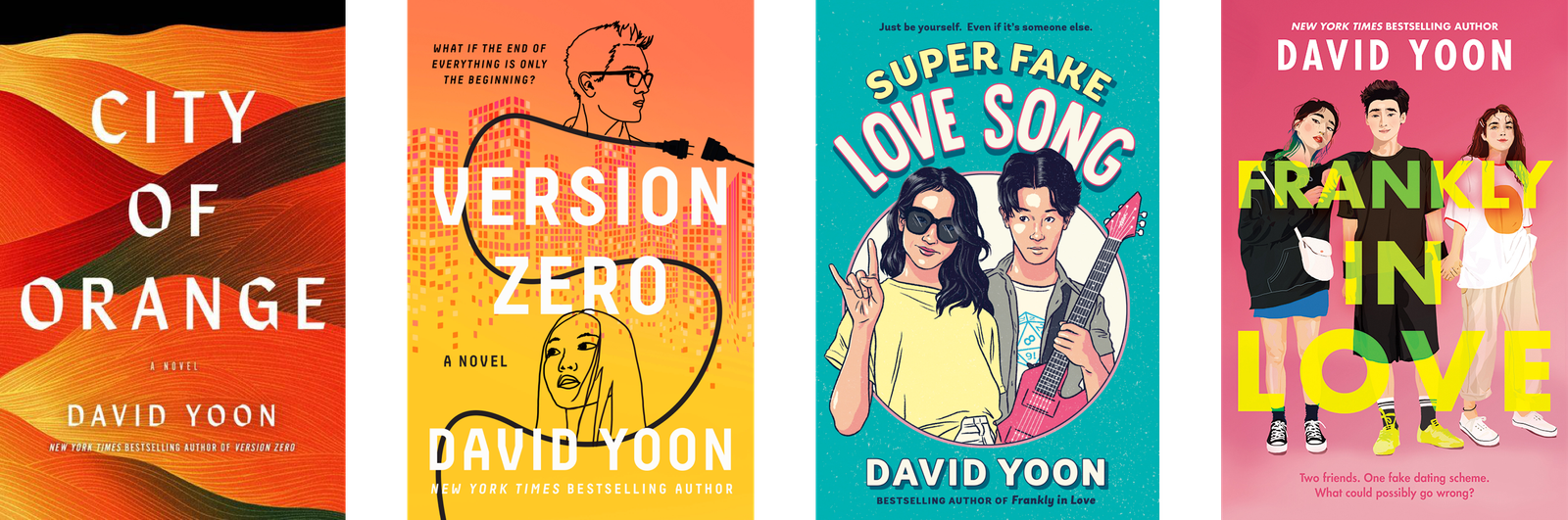
He’s also the co-founder (with wife Nicola Yoon) of the Random House imprint Joy Revolution, which publishes love stories starring people of color.
