
Why "Killer Klowns from Outer Space" is more relevant than ever

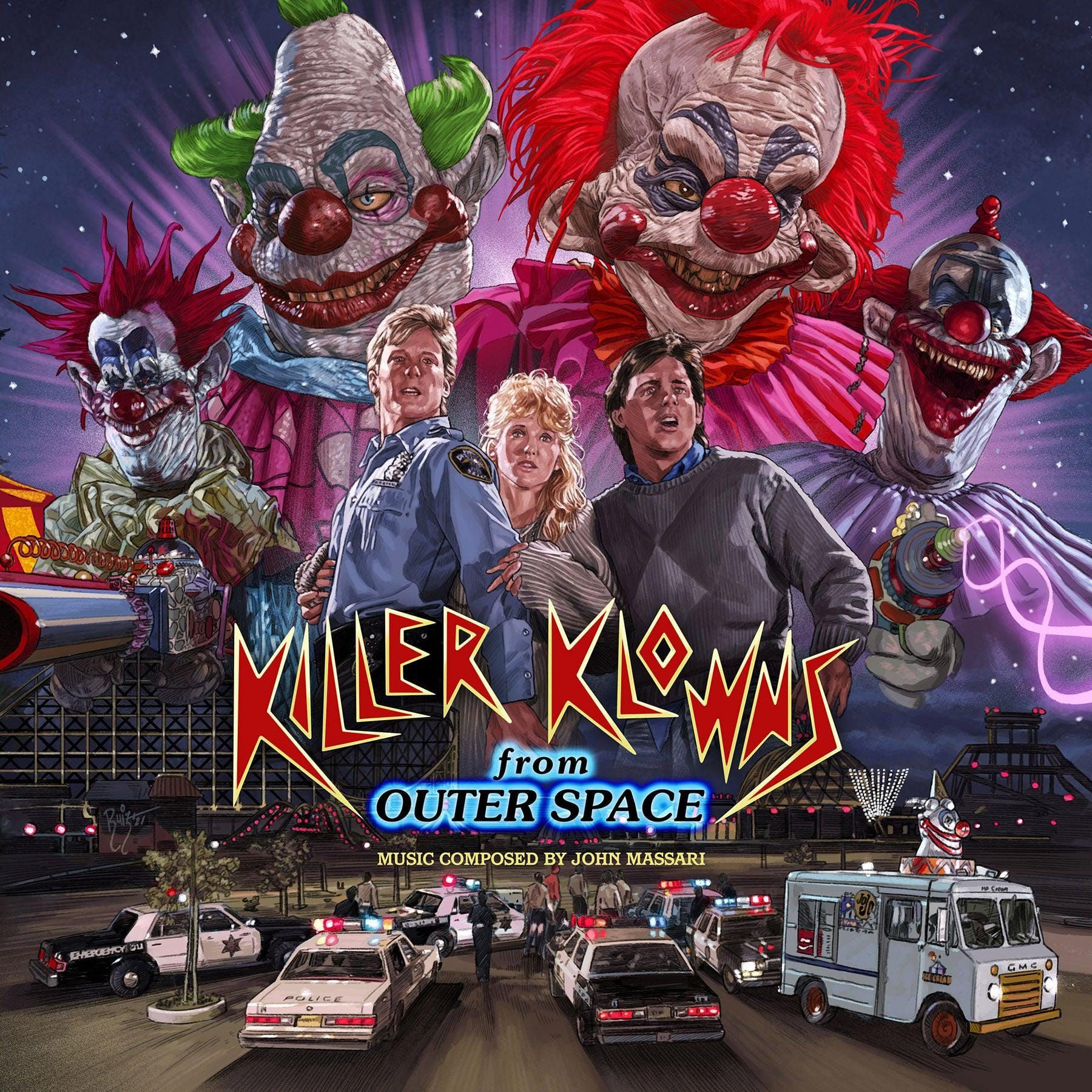
Just kidding. Or am I?
👋 Happy Friday! I'm still nursing a Paradise hangover. (Mentioned last week.) Also feeling weirdly confident? (See previous insecurities.) Maybe it's an effect of my recent, first ever writer's retreat—remind me to tell you about that later.
This week, my teenage daughter somehow heard about the 1988 schlock comedy-horror cult classic Killer Klowns From Outer Space, because everything old on the internet is new again, and forced me to watch it. The story is as inane as it sounds. Terrible acting. Horsey-as-hell dialogue. On-the-nose kill scenes.
And yet, it's a masterpiece.
It's a mashup, from when mashups were still fun.
In 1988, the world was introduced to Pennywise (It's original killer klown), the darkly candy-striped world of Beetlejuice, Oingo Boingo's sinister carnival soundtrack, chatty slashers like Nightmare on Elm Street, and the DIY punk rebelliousness of, say, The Cramps. Killer Klowns mashed up all these influences together in a film concept that seemed exhaled in a single cloud of bong smoke. It has a definite pre-internet vibe—each influence is chunky and distinct, quite a different mouthfeel from the finely granulated, esoteric supersalt of memes from our current era, where everything is effortlessly available any time.
It hugely commits to the gag the "hard" way.
Klowns is your bog-standard pornographic horror (there's two types of horror movie, pornographic and non-pornographic. See Umberto Eco's classic How To Recognize a Porn Movie). The title itself is its entire (unimpressive) pitch. But even a casual watch reveals an inspired level of production finish. The detailed, fully animatronic (!) heads of the Klowns. The hand-crafted sets. It sounds bone-headed to say, but dudes had to freakin' draw up set design plans, go in and build a bunch of shit to safety code, carefully tape and paint every neon-colored stripe and swirl, and design MF-ing lighting to match. The sheer physicality of the movie gives it a rich, chaotic quality that analog-o-philes will readily appreciate as a warm antidote to the digital ultra-polish of today.
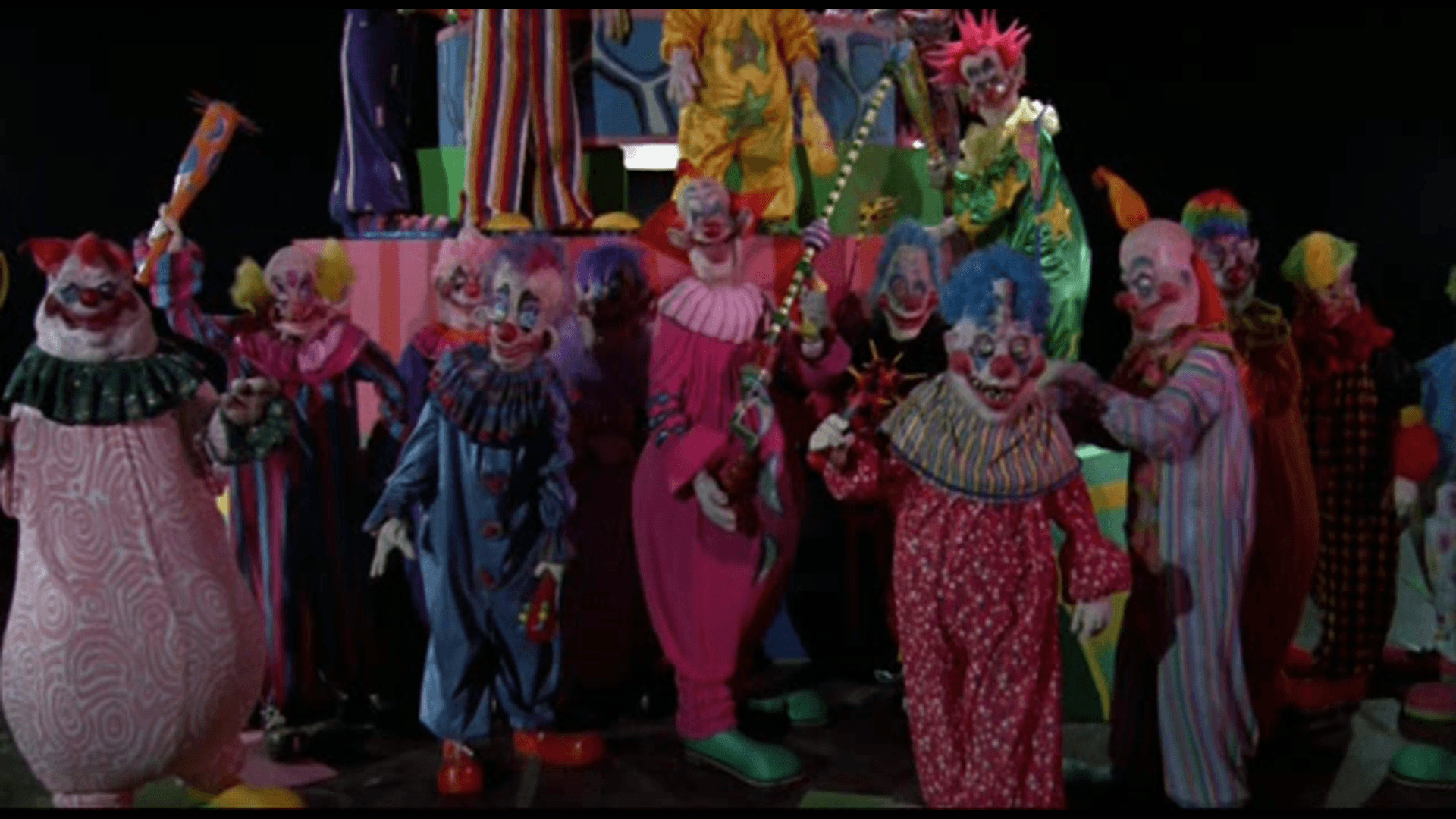
In 1988, the filmmakers couldn't prompt-jockey this up like some clanker tech bro. They had to go all in. Get up. Leave the house. Assemble a team. Put together a schedule. Test practical effects. Take smoke breaks. Stretch. Then get back to work.
In other words:
The movie believed in itself.
It had to. You don't commit a bunch of carpenters and set leases if you don't trust what you're doing. What's most amazing to me is how hard this movie was to make. How much effort it took. All for a one-line gag? Killer Klowns from Outer Space? You guys.
I have a pet theory that the harder something is to make, the more vulnerable you, the artist, must become to make it, which in turn raises its stakes and makes it matter more. Conversely, the easier something is to make, the less invested you are as an artist. Which is why Seruat's pointillism is compelling, and ChatGPT is not. (I'm still working on this pet theory, so don't yell at me.)
Anyway. People obviously recognize and deeply appreciate this kind of artistic commitment, because Klowns is still a classic today, 38 years later. Also there's a freakin' game? For PS5? From 2024? WT actual F?
It points to a hunger among our fellow human beings to believe in something. (That something is each other.) This is very lofty-sounding, but I do think we tend to instinctively smell out true belief without realizing it. Also this movie is delightfully stupid. Watch it with all your insufferable nerd friends, phones off, movie theater rules (no skips, no pauses). Let its atrociously catchy theme song nest within your poor brain. And make sure your popcorn doesn't eat you back.
Have a great weekend! As always, feel free to chat with me whenever.
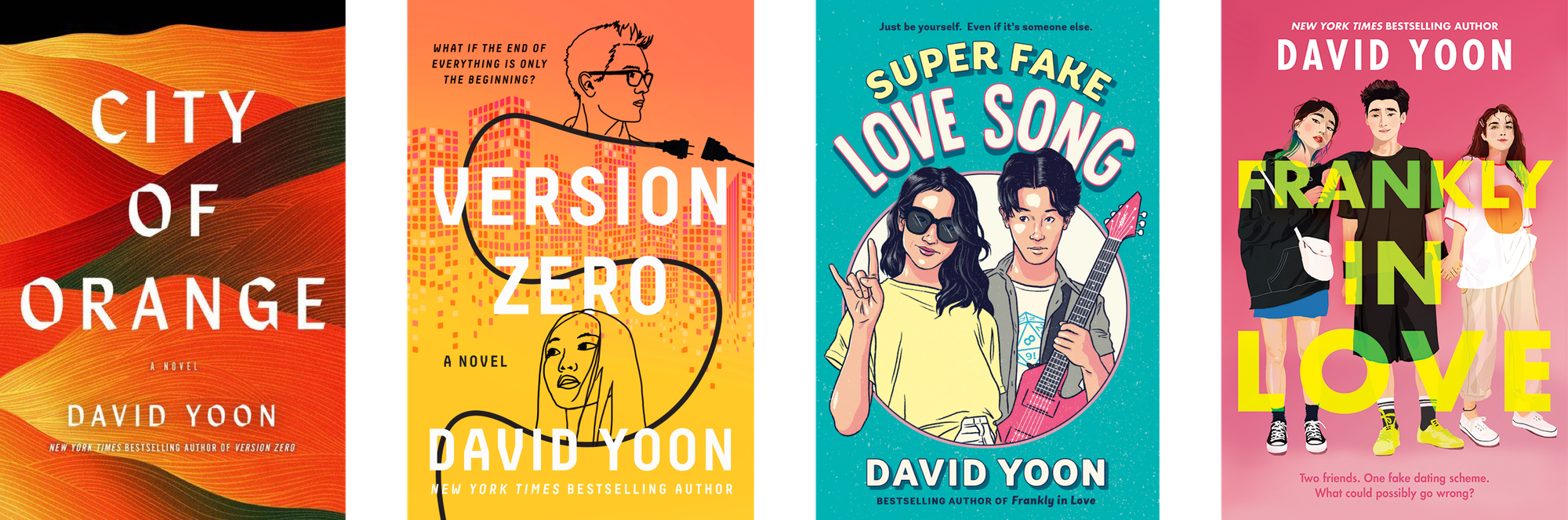
| David Yoon is the New York Times bestselling author of City of Orange, Version Zero, and for young adults, Super Fake Love Song and Frankly In Love. |
 |
| He’s also the co-founder (with wife Nicola Yoon) of the Random House imprint Joy Revolution, which publishes love stories starring people of color. |
 |